Organic-waste audit
Understand food-waste sources, approximate quantities and current disposal.
 Talk to our team+91 94686 26868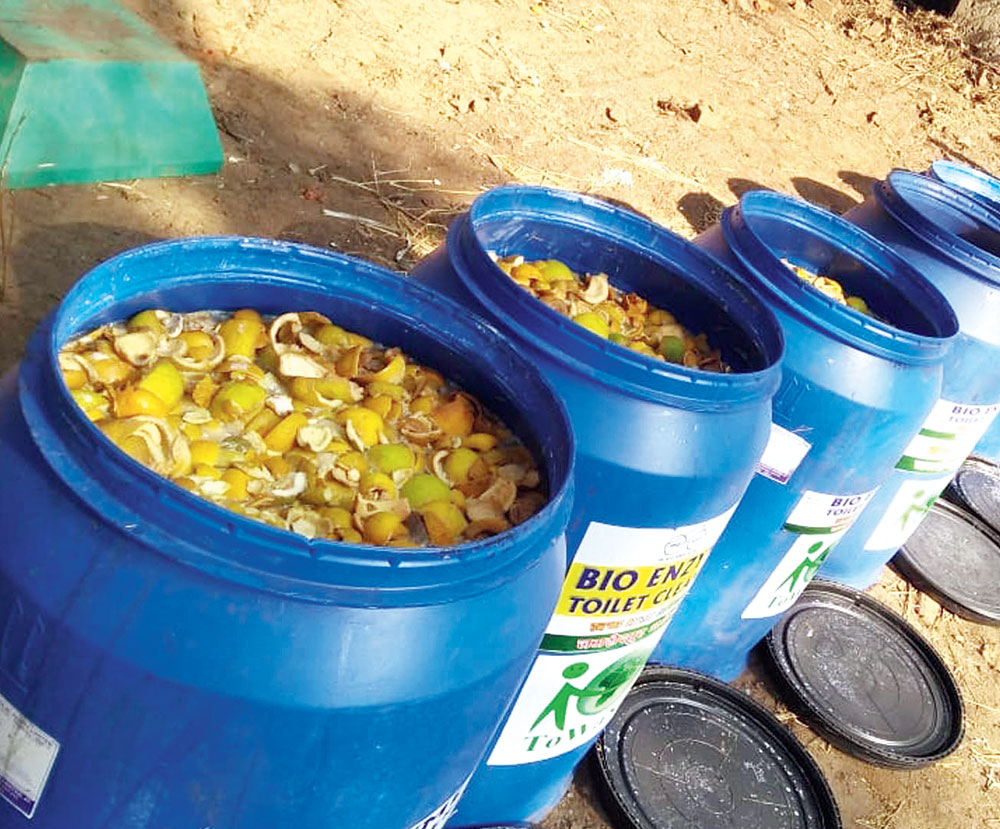
Food and organic waste recycling in Rajasthan
Site-specific organic-waste programs that keep suitable food waste separate and route it towards composting or another environmentally useful output.
Discuss your requirement ↗Service overview
Food waste decomposes naturally, but disposal in a compacted landfill restricts the conditions needed for that process. Separating organic material at source creates an opportunity to use composting or another suitable recovery pathway instead of burying it with mixed waste.
Kaustav’s service material describes organic recycling for edible food waste and the potential to reduce landfill volumes. Its company documents also record practical bio-enzyme work using fruit and vegetable waste, reflecting hands-on learning with separated organics.
A successful program depends on the waste source, daily quantity, contamination risk, container type and collection frequency. Kaustav reviews these factors before proposing a practical operating method.
What we can support
Understand food-waste sources, approximate quantities and current disposal.
Keep organics separate from plastic, glass and other contamination.
Choose suitable, clearly marked containers for kitchens and disposal points.
Plan handling frequency around hygiene, volume and available storage.
Assess composting or another appropriate use for accepted organic material.
Help kitchen teams, residents or staff follow the accepted-material rules.
Our approach
Review the main food-waste sources, daily volume and contamination risks.
Introduce dedicated containers and clear instructions at the source.
Set a safe, practical handling and pickup routine for the site.
Route accepted organic material towards a suitable beneficial use.
Who this is for
Potential program outcomes
Frequently asked questions
The accepted list is defined for each site. Fruit and vegetable waste and other suitable food waste may be included, while plastic packaging, glass, metal and non-approved material must be kept out.
Odour risk is managed through source segregation, suitable containers, good housekeeping and a collection frequency matched to the site. The operating plan is important.
Separating a significant organic fraction can reduce the amount of mixed waste sent for disposal. The actual reduction depends on the site’s waste composition and participation.
Kaustav can assess the site and discuss a suitable organic-recovery pathway, which may include composting where the waste type, quantity, space and operating conditions are appropriate.
Start with the source